
Smash factor is one of the most common golf terms when discussing distance and impact efficiency. At its core, it’s a simple relationship: ball speed divided by club speed. In practical terms, it shows how much of your swing speed actually transferred into the golf ball at impact. For a clear overview of what smash factor measures and why it matters in golf analysis and practice, Voice Caddie’s guide offers a useful explanation.
Because smash factor is built on this simple relationship, it helps explain something most golfers have experienced: two swings that feel almost the same can lead to very different results. It connects what happens at impact to what you see in ball flight, which is why it shows up so often in modern training and club fitting. TrackMan also provides a clear technical overview of how smash factor is defined and used.
Why Smash Factor is Hard to Feel on a Traditional Golf Course
Understanding smash factor is one thing. Recognizing it clearly on the course is another.
On a traditional course, feedback is rarely clean. Golfers rely heavily on feel. Sometimes that works. Often it doesn’t. Ball flight changes with wind, temperature, slope, and lie. Even the condition of the golf course grass matters. Turf interaction influences where the club bottoms out, which affects strike quality before the ball ever leaves the face. In situations like night golf, visual cues drop even further, making judgment harder.
This is also why golfers often misread “good contact.” You may only notice the issue when greens start getting missed or carry distances come up short more often than expected. Outdoors, feedback tends to arrive later, and by then it’s difficult to isolate the cause.
Indoor Golf Simulator: A Smarter Way to Track Your Smash Factor
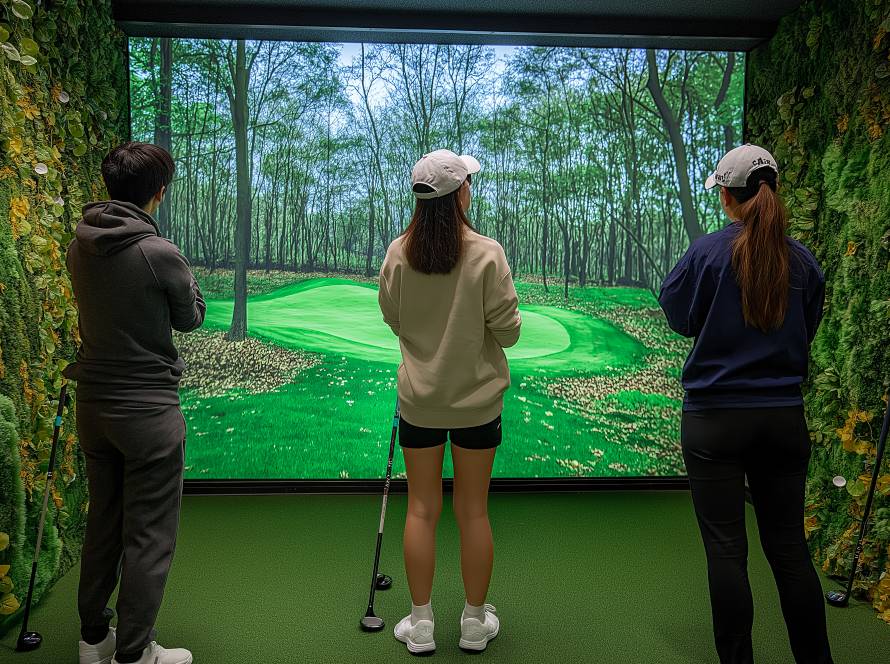
This is where indoor golf becomes especially useful. For golfers who try to practice golf at home but struggle with space and feedback, an indoor golf simulator offers a far clearer reference point. Many of the variables that complicate outdoor practice are reduced. Wind, changing lies, and turf interaction are reduced, allowing golfers to focus more clearly on strike and delivery rather than constantly adjusting to conditions.
At Birdie Indoor Golf Center, the GreenJoy golf sim gives you clear, immediate visual feedback. You see your swing right away. Cameras record it. You can watch it back at once. Slow it down. Pause it. Compare one swing to the next. This helps you understand what changed, instead of guessing.
The system also records key shot data on every swing. You can see club speed, ball speed, launch angle, and carry distance. These are the same pieces of information used to understand impact efficiency and smash factor. When club speed stays similar but ball speed or carry changes, you know the difference came from contact or delivery.
After a short practice session, patterns start to appear. You can see which swings lead to solid contact and better ball speed.
This is when smash factor becomes something you can recognize and improve, not just a number you hear about. For a practical look at how smash factor is measured and how golfers can use it to identify swing weaknesses or track improvement over time, this guide offers clear tips.
Smash Factor is Not the Whole Shot
Smash factor is often misunderstood as a score. Higher looks better, but that assumption breaks down quickly in real play. A shot can show solid efficiency and still launch too low, spin too much, or start offline. Distance alone does not lower scores. What matters is how launch, spin, start line, and dispersion work together. This is why smash factor should be read as context, not a target. Articles from PING and Foresight Sports both point out that smash factor is one tool among many for understanding impact, not a full answer on its own.
Indoor practice makes this easier to see. Golfers can focus on how contact and delivery affect the shot, instead of chasing a single number.
Practice With Purpose at Birdie Indoor Golf
At Birdie Indoor Golf, indoor practice is built around clear feedback.
- See your swing and key data right after each shot.
- Track club speed, ball speed, launch angle, and carry distance.
- Practice without wind, weather, or changing lies getting in the way.
- Play full rounds on a realistic indoor golf course through virtual golf simulations.
- Spend less time adjusting to the environment and more time improving your strike.
Book your indoor golf session at Birdie Indoor Golf and visit us in Richmond or Burnaby to practice with clear, focused feedback.